Tejas is thirty-five and teaches mathematics at a school in Nashik. For a year he has been learning the flute, ten minutes at a time, before the school bus horn starts up. This morning at six, on the terrace, with the water tanks still dripping from the night, he plays one whole song from the first note to the last. No cracked note, no restart, no stopping to find his place.
His first thought is, “But it is only one song.” He wipes the flute on his shirt, picks up his tea, which has gone lukewarm, and goes down the stairs without pausing.
Hold on to that terrace. We will come back to it.
The feeling we keep for later
Most of us run on a quiet rule: I will feel good when it is done. When the exam is cleared, when the loan is closed, when the flute is played at a family function with everyone listening. Until then, anything smaller is just the road, and a road is not something you stop to admire.
The trouble is what happens when the big day arrives. It is lovely, and it lasts about an evening. By the next morning a new goal has moved into the same seat, and the feeling you were saving has been spent in a few hours.
Meanwhile the long stretch before it, the months of small effort, went by with no marking at all. You did a great deal and felt almost nothing about it, so the stretch felt like a debt rather than a life.
The reframe: celebration is the fuel, not the reward
We think of celebration as the prize at the finish line. Try seeing it the other way. A small, honest moment of feeling good about a step is what carries you to the next step. It is fuel along the way, and a car does not take its fuel only at the destination.
This does not mean throwing a party for brushing your teeth. It means that when you did a hard thing, even a small one, you let yourself register that you did it. Registering is a quiet act. It can take ten seconds.
Celebration is not the prize at the finish line. It is the fuel that gets you to the next step.
There is a second part. A win you do not notice does not count for the mind. Tejas played the song, and the song happened. But he gave himself no signal that it happened, so for his inner record it is as if the morning never took place.
What the brain does with a small win
The brain learns what is worth repeating partly through the feeling that follows an effort. When you finish something and let a little satisfaction land, the effort and the good feeling get linked. Next time, starting is a little easier, because some part of you expects that this will feel worth it.
When progress is waved away every time, the opposite slowly happens. The effort is paid for and nothing comes back. Over weeks, a mind that gets no return on its effort starts to treat the effort as pointless, and motivation fades. People often blame themselves for this and say they are lazy, when the more likely cause is that they never let the work register.
This is general and modest. It is not a technique that guarantees you will stick with anything. It simply explains why a pause after a task is not a waste of time. It is the moment in which the mind files the effort under “this was worth doing”.
What Rajyoga adds
In Rajyoga we speak of contentment as a sign of spiritual strength, not as a lack of ambition. A soul that is content can keep working without being pushed by dissatisfaction. Rajyoga also encourages a quiet account of the self each night: what went well today, what I did with care, where I stayed steady.
Rajyoga holds that seeing your own specialities, and thanking yourself and the Supreme, the source of peace, for them, is not ego. Ego says “I am better than others”. This says “something good was done today, and I will not pretend otherwise”. The first inflates the self. The second keeps the soul light and enthusiastic, which is what the next effort needs.
Whether or not you hold the view of a Supreme, the practice stands on its own. You are keeping an honest ledger, and an honest ledger has credits in it too.
The small ritual
A mark does not have to be loud. Many of us already have small gestures that say “this is done”: the first sip of chai after a long task, a short walk around the block, a flower placed on the shelf, a diya lit on a good evening.
The point of a ritual is that it is physical and it is yours. Thinking “well done” is easy to wave away, but standing up and doing a small thing with your hands makes the moment real. It also gives you something to look forward to when the work is hard.
Choose one that costs nothing and takes under two minutes, and that you would not feel silly doing. If it feels like a performance, it is too big.
A seven-day practice
Each day asks for a minute or two. The aim is to catch wins before they slip away unseen.
- Day 1. Three things you would ignore. At night, write three small things you did today that you would normally not count: answering a message you had been avoiding, cooking when you were tired, walking instead of scrolling.
- Day 2. Ten seconds. After you finish one task today, stop for ten seconds before the next. Let yourself feel that it is done, and let a small satisfaction come if it wants to.
- Day 3. Stop at the full stop. Notice the urge to add “but it is only...” to something you did well. When it comes, say the first sentence, stop there, and leave the “but” unsaid.
- Day 4. Tell one person. Tell someone one small win from this week, in one sentence, without apologising or laughing it off. Let them respond.
- Day 5. Choose your mark. Pick a small personal ritual, a flower, a cup of tea, a short walk. Use it today after one thing you finished.
- Day 6. Two minutes as a soul. Sit for two minutes. Remember you are a soul, not a list of results. Thank yourself for one effort this week, by name, and say it silently.
- Day 7. The week’s account. Before sleeping, look back over the week and write down every small win you can find. Read the list once, slowly, before you put the pen down.
Back to the terrace
Another morning, the same terrace, the same six o’clock. The water tank is dripping, the first crows have started, and Tejas plays the song again. This time one note slips near the end, and he carries on to the last line.
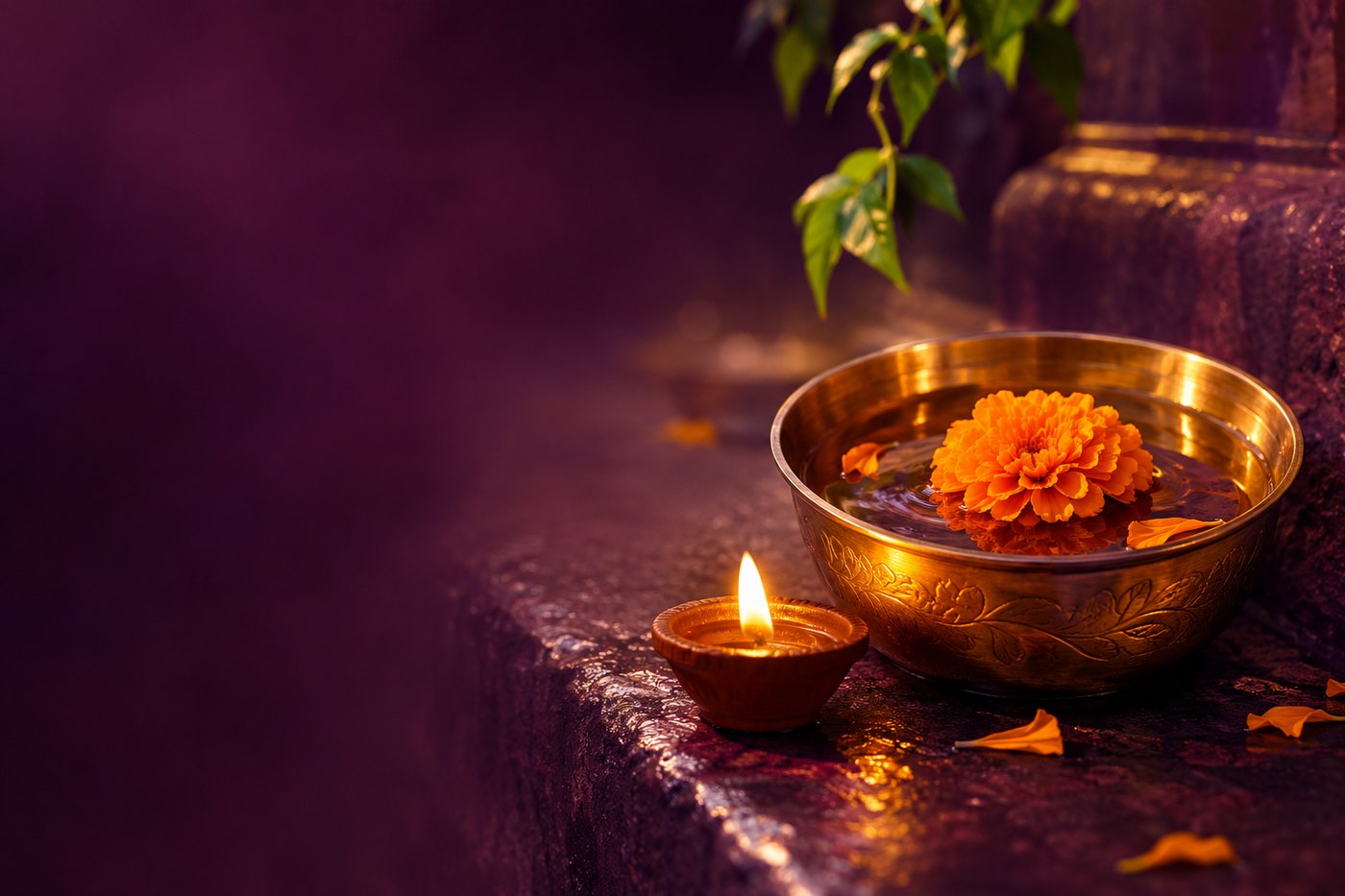
He feels the old sentence start to form: “It is only one song.” He lets it stop at the full stop. Then he takes a small brass bowl from the shelf by the door, fills it with water from the tap, and floats a marigold in it. He sits for a minute beside it, flute in his lap, and does nothing at all.
It is not a party and nobody sees it. But the morning now has a mark on it, and the next morning will find him a little more willing to begin.
If you would like a steady space to practise this alongside others, you are welcome to join us in Antar Dhyan Sadhna.
You do not have to wait for the big win to feel the road under you.