The power cut comes at nine in the evening, in the middle of a serial, and the whole flat goes dark at once. Somebody groans. A phone torch swings across the ceiling. Then you remember the small brass lamp in the kitchen cupboard, the one that comes out once a year.
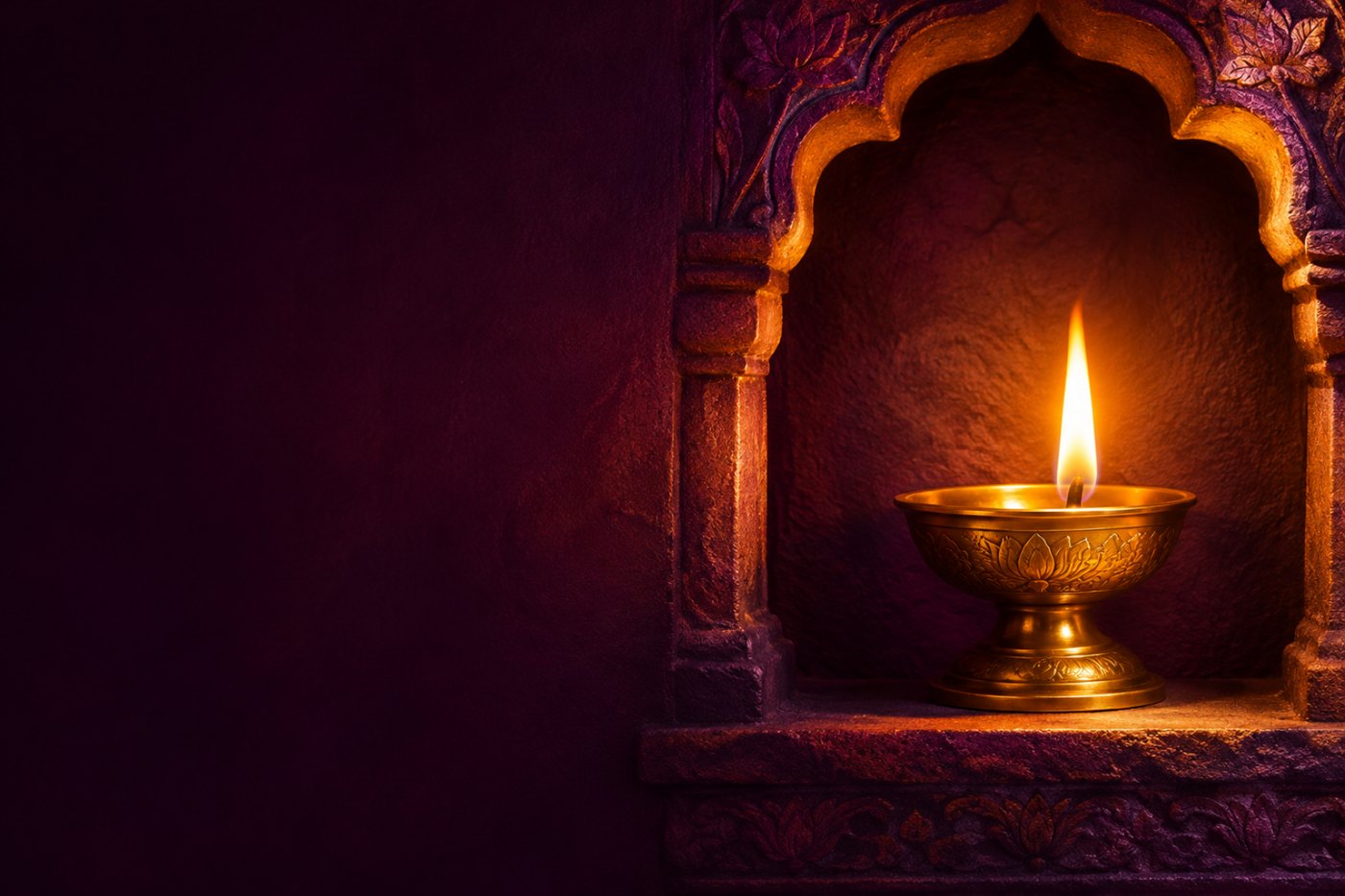
You fill it, set the wick, and strike a match. The flame leans, steadies, and stands up straight. And something odd happens in the room. Voices drop. The child who was complaining a minute ago sits down on the floor. Nobody has been told to be quiet. The light simply has that effect, and for a few minutes you feel more settled than you did all day.
Hold on to that small scene. The rest of this article is about why it happened, and why you do not need a power cut to repeat it.
What actually went dark
Most of us talk about our inner light as if it were a battery that has run down. We say we feel drained, dull, switched off. We assume the fix is to add something: a better routine, a bigger goal, a new course, more positivity.
Rajyoga looks at it the other way. It teaches that you are a soul, a conscious point of light, and that the light is not manufactured by effort. What changes is how much of it you can feel. Think of a lamp with soot on the glass. The flame is burning perfectly well. It is the glass that has darkened, one thin layer at a time, with worry that was never put down, resentment that was kept polished, hurry that never stopped, and the habit of living from the role instead of from the self.
This is a more hopeful way to see a hard season. If the light were gone, you would have to build it. If the glass is dusty, you only have to wipe.
Your inner light is not something to build. It is something to uncover.
Why stillness lets the glow come through
There is a plain physical side to this, and it helps to know it. A mind that is constantly scanning, replying and planning keeps the body in a low, steady state of alertness. The breath stays high in the chest, the jaw holds, the eyes dart. In that state it is very hard to feel anything subtle, including your own calm. Subtle things are only noticed in quiet.
When you give attention one gentle, steady thing to rest on, the scanning slows. A soft gaze on a candle flame is one of the oldest ways of doing this, and many people find the mind follows the eyes. The breath lengthens a little. The shoulders come down. Nothing mystical is needed to explain that, though what people feel inside afterwards often feels exactly that: a warmth, a sense of coming home.
Rajyoga uses a different anchor, the thought itself. You sit with open eyes or closed, and you think calmly, “I am a peaceful soul, a point of light.” Not as an affirmation you force yourself to believe, but as a direction for attention. Where attention rests, experience gathers. A few minutes of this is not an escape from life. It is a way of wiping the glass.
The surprise: you cannot polish it with force
Here is where many sincere people go wrong. They treat the inner light as one more thing to achieve, and they meditate with the same clenched effort they bring to their targets. They sit, they strain, they judge the session, and they get up feeling dimmer than before.
Light does not respond to grip. A lamp is lit by a small, patient flame and a still hand, and the flame is blown out by too much fuss. If your practice feels like a performance review, soften it. Five minutes of easy, warm attention is worth more than forty minutes of striving.
It also helps to stop waiting for a special mood. The light is not reserved for the days you feel spiritual. It is most useful on the ordinary, tired, slightly irritable afternoon, and that is the afternoon to practise on.
Things that quietly dim the glass
You do not need a list of sins, only a few honest observations. See which ones are familiar.
Carrying an old hurt as a daily companion. Keeping a running commentary about what others should have done. Saying yes when the whole body says no. Living entirely on the phone from the moment you wake. Going to bed with an unsettled mind and calling it normal. None of these make you a bad person. They are simply layers, and layers can be lifted a little each day.
What is useful here is the pattern, not the guilt. Most dimming happens in small, unremarkable moments: a sharp reply you replay for an hour, a favour you resent, a morning that begins with other people’s news. Seen one at a time they look harmless. Added together over a year they make a glass you can hardly see through, and that is why the wiping has to be small and daily, too.
A gentle caution belongs here. If you have felt flat or hopeless for a long time, or if the darkness feels heavier than tiredness, please speak to a doctor or a counsellor as well. Practices like this are a support, not a replacement for care.
A seven-day practice for wiping the glass
You need a few minutes, a quiet corner, and if you like, a small lamp or candle. Keep each day short.
- Day 1. Light it and just look. Light a lamp or candle in a dim room and watch the flame for three minutes with a soft gaze. If your mind wanders, bring the eyes back, without comment.
- Day 2. Name one layer. Sit with a notebook and write a single line on what has been dulling you this week. Do not solve it. Naming it is enough for today.
- Day 3. Say it once, slowly. Close your eyes and think, “I am a peaceful soul, a point of light,” then let the words go and rest in whatever you feel. Five minutes.
- Day 4. Let one grudge cool. Think of one small irritation you have been polishing. Say inwardly, “I am setting this down for the evening.” You may pick it up again tomorrow. Most people find they do not.
- Day 5. Give light away. Today, send one genuine good wish to someone: a message, a call, or silently as you watch them walk away. Light grows when it is passed on.
- Day 6. One hour with the phone away. Choose an hour in the evening and keep the phone in another room. Notice how the room feels with the light of a lamp and nothing else.
- Day 7. Sit with the flame again. Repeat Day 1, then Day 3. Afterwards write two lines: what felt different, and what you will keep.
Back to the flat
The electricity comes back an hour later and the room floods with tube light. Somebody switches the television on and the evening carries on as before. But you notice you did not rush to put the lamp away. It sits on the kitchen counter, still warm, with its small steady flame, and for a minute you stand beside it before you switch off the main lights again.
The lamp was never the point. It only reminded you of something you already carry, and the power cut only made you notice it.
If you would like a steady space to practise this alongside others, you are welcome to join us in Antar Dhyan Sadhna.
Your light did not go out. It was only waiting for you to be still enough to see it.